ESP32 Network - ESP32-Based Smart Home Hub
timeline: 2025
tech stack: C, ESP-IDF, Wi-Fi Mesh, MQTT, Node.js, WebSockets
Overview
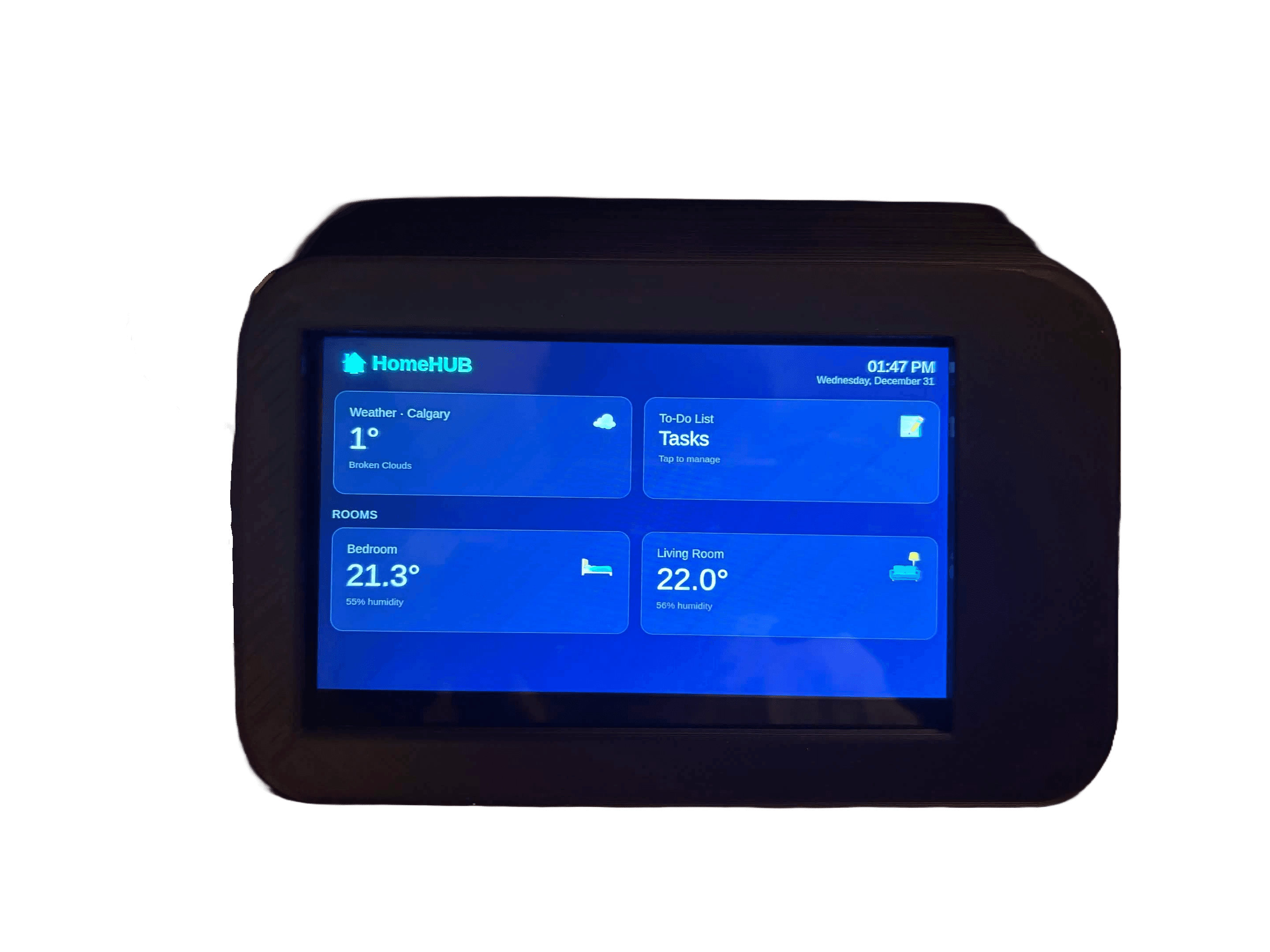
A home automation hub built around a mesh network of ESP32 microcontrollers. Each node handles a different task — temperature and humidity sensing, relay-controlled lighting, door/window contact monitoring, and motion detection — while a central Node.js server aggregates data, serves a real-time dashboard, and lets you control everything from your phone.
How It Works
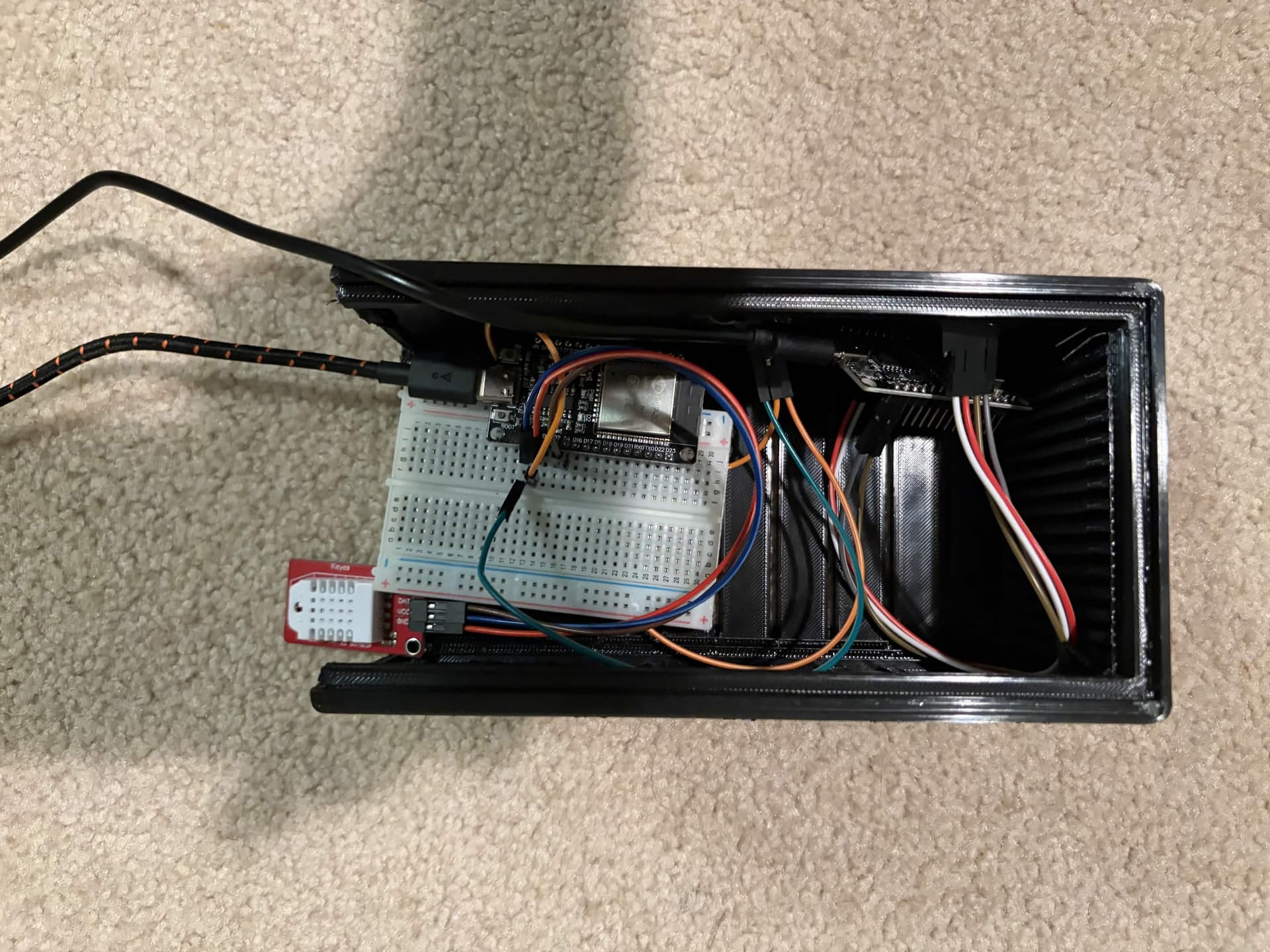
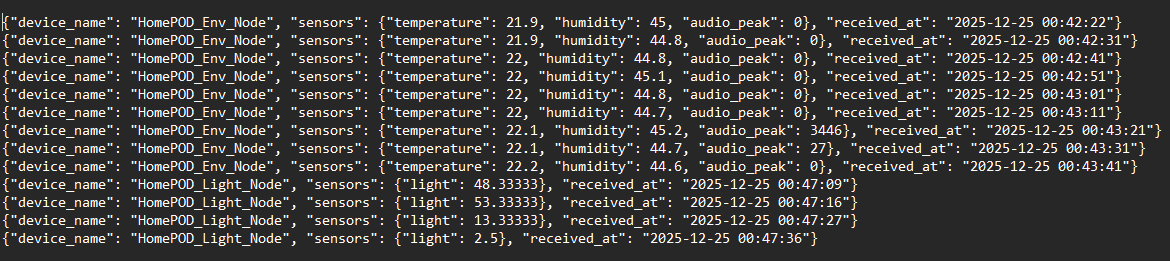
The ESP32 nodes form a self-healing Wi-Fi mesh using ESP-MDF, so adding a new sensor to a room is just plugging in another board. Each node publishes sensor readings and subscribes to control commands over MQTT. The central hub runs a Node.js server that bridges MQTT to a WebSocket-powered dashboard — sensor data streams in live, and toggling a light or setting a thermostat threshold pushes a command back down to the right node instantly. All telemetry is logged to a time-series store for historical graphs.
Results
The network reliably coordinates multiple ESP32 nodes across a house with sub-second latency between sensor events and dashboard updates. The mesh topology handles node drops gracefully, and the system has been running continuously as a fully self-hosted smart home setup — no cloud dependencies, no subscriptions, complete local control.